

Psychosocial
Risk Assessment
Psychosocial risk management can feel overwhelming. There is often uncertainty around where to begin and how to respond in ways that are both meaningful and realistic within the pressures of day-to-day work.
Noreia’s approach is designed to simplify that process.
Rather than treating psychosocial risk as a disconnected compliance exercise, the work focuses on understanding how people are functioning within the realities of the workplace — and identifying where pressure may be quietly becoming difficult to sustain.
The process is practical, relational, and nervous system-informed, helping workplaces move from uncertainty toward clearer understanding and realistic action.
A Clear Process

1. Making Sense of the Risk
Psychosocial hazards are aspects of work that may negatively impact psychological health, safety, and functioning over time.
This can include:
Excessive workload and chronic pressure
Poor communication or relational strain
Unclear roles or conflicting expectations
Exposure to trauma, crisis, or emotionally demanding work
Lack of support or psychologically unsafe dynamics
Organisational systems that normalise overload
Leadership strain and sustained operational pressure
For many workplaces, the challenge is not a lack of care.
It is that pressure accumulates gradually — and people often continue functioning remarkably well long after conditions have become difficult to sustain.
Part of the work is helping workplaces better understand what psychosocial risk actually looks like in practice: how stress changes communication, how overload narrows capacity, how chronic pressure impacts decision-making, how team dynamics shift under strain, and how nervous systems adapt to sustained demand over time.
This creates a more grounded understanding of risk — not simply at policy level, but within everyday workplace functioning.

2. Finding Where Strain Is Developing
Noreia’s assessment process focuses on identifying where strain may be developing within the workplace and how that strain is impacting people, teams, leadership, and day-to-day functioning.
This may involve:
Consultation with leadership and key stakeholders
Staff conversations and facilitated discussions
Review of workplace systems and operational pressures
Identification of psychosocial hazards and risk patterns
Exploration of communication, workload, and relational dynamics
Review of workforce sustainability concerns
The focus is not on blame.
It is on understanding.
Often, workplaces already sense that something is becoming harder to sustain — but haven’t yet had the structured space or language to fully identify what is driving it.
Noreia’s approach helps make those patterns more visible, understandable, and actionable.

3. Building a Realistic Response
Once pressure points and psychosocial hazards have been identified, the next step is developing practical ways to respond.
This includes identifying where risks can be eliminated, minimised, better managed, or more appropriately supported over time.
Recommendations are grounded in the realities of the workplace rather than idealised models that are difficult to sustain in practice.
Depending on the context, this may include:
Communication and leadership strategies
Workload and role clarity adjustments
Systems and process improvements
Psychologically safer workplace practices
Workforce sustainability strategies
Support structures for high-impact teams
Reflective and restorative practices for leaders and staff
The goal is not perfection.
It is helping workplaces create conditions that support clearer thinking, healthier communication, safer systems, and more sustainable ways of working over time.
The Noreia Approach
What distinguishes Noreia’s work is not simply the frameworks it draws on — it is the quality of attention brought to each workplace.
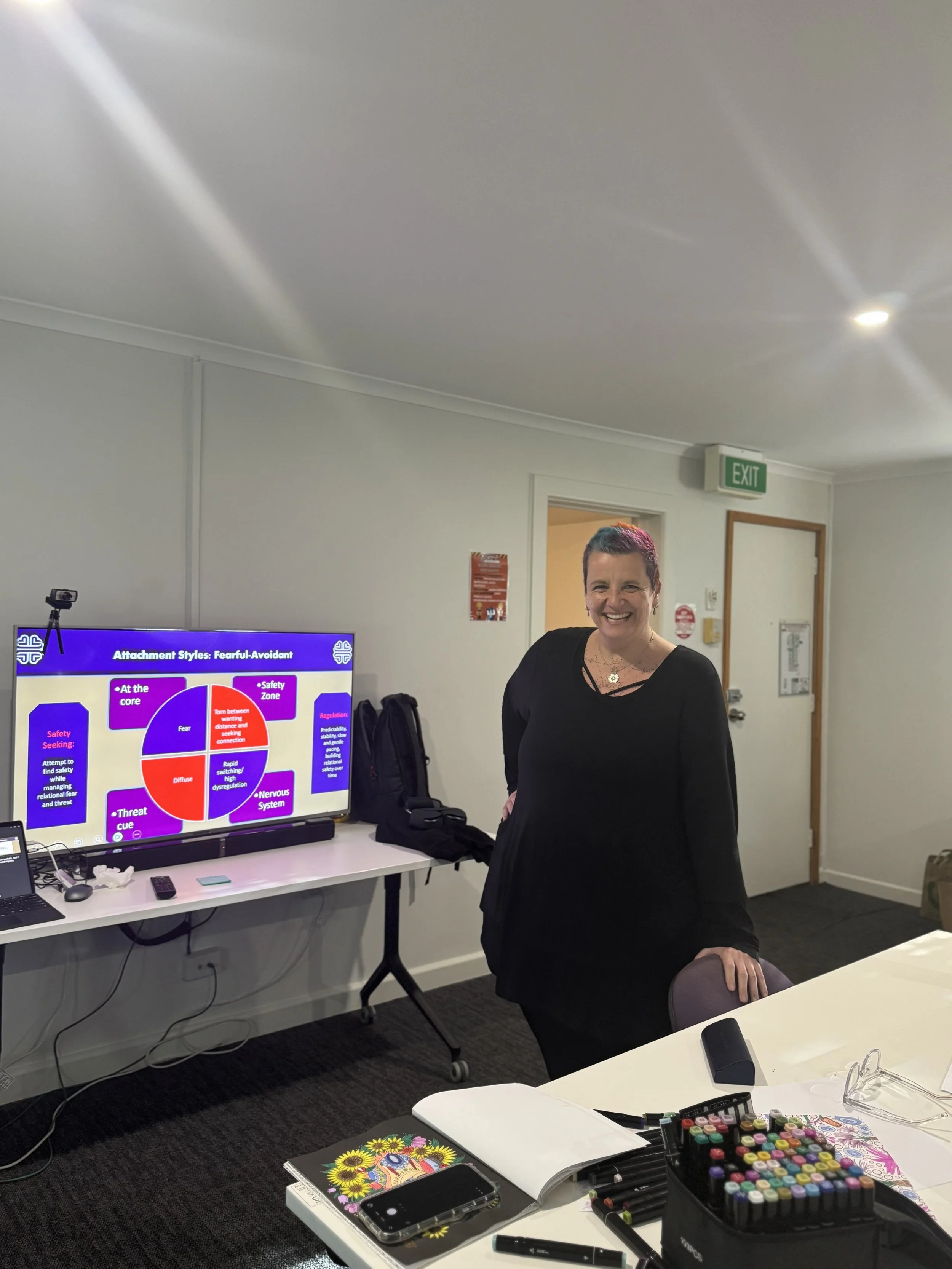
Karin El-Monir works with applied neurobiology, systems thinking, trauma-informed practice, and psychosocial risk awareness. But the starting point is always careful observation: taking time to understand what is actually happening before naming what needs to change.
In practice, that means identifying and naming what others in a workplace may be observing but not yet articulating — the pressure patterns, relational dynamics, and systemic conditions that shape how people function day to day.
Because psychosocial risk rarely announces itself clearly.
More often, it shows up in communication patterns, how teams respond under pressure, how leaders begin to function differently under sustained demand, and how workplace cultures quietly shift around conditions that have gradually become unsustainable.
Understanding that requires more than a checklist.
It requires the kind of assessment that is both operationally grounded and attuned to how human beings actually function under strain.

Who This Work Is For
Psychosocial Risk Assessment may be particularly valuable for workplaces experiencing:
Burnout, overload, or workforce strain
Increased absenteeism or turnover
Communication breakdowns or relational tension
Leadership fatigue or decision overload
Significant organisational change
High emotional demand or trauma exposure
Concerns around psychological safety
WHS obligations relating to psychosocial hazards
Noreia works across corporate, government, community, and high-impact sectors, supporting businesses and organisations seeking more sustainable and psychologically safer ways of working.