
Change begins with understanding people, not just what they do, but why they do it.
It’s Karin again. I was born and raised in Austria, in a region often forgotten by history, but when the Romans arrived, they named the entire area after the ancient goddess worshipped there. Her name stayed with me - a deep connection to my cultural and historical roots.
About Noreia
Noreia Consultancy Space was founded from a simple observation:
People are often functioning remarkably well inside conditions that have quietly become difficult to sustain.
Workplace challenges are rarely caused by one thing alone.
More often, they emerge through the accumulation of pressure, competing demands, communication strain, emotional load, leadership complexity, and systems that gradually ask more of people than can realistically be sustained long term.
Noreia exists to help organisations, leaders, and professionals better understand what is happening underneath those pressures — and respond in ways that are practical, realistic, and grounded in how human beings actually function under strain.
The work sits at the intersection of psychosocial risk, workforce sustainability, leadership support, organisational systems, and nervous system-informed practice.
It is about helping people and organisations develop the reflective capacity, awareness, and practical understanding needed to navigate complex work more sustainably over time.
How Noreia Began
The name Noreia came from a particular kind of recognition.
Karin El-Monir was raised in Austria and has lived and worked in Australia for many years — and over more than two decades of practice across Australia, Ireland, and Austria, that cross-cultural perspective has remained central to the work. Moving between those contexts — and the different relationships each carries toward work, pressure, rhythm, and human limitation — produced something that stayed.
Not an idealised version of “balance.”
Not a framework for slowing down.
But a clear-eyed understanding that humans function differently depending on the conditions surrounding them.
Pressure changes people.
Chronic stress changes communication.
Responsibility changes decision-making.
Relational environments shape how safe people feel to think clearly, speak honestly, and function well over time.
That observation eventually became the foundation of the work.
Not simply understanding individuals in isolation — but understanding how people function within systems, workplaces, leadership structures, and environments that can either support sustainable functioning or gradually erode it.
The Approach
Noreia’s work is grounded in applied neurobiology, systems thinking, trauma-informed practice, psychosocial risk awareness, and real-world organisational experience.
The focus is practical rather than performative.
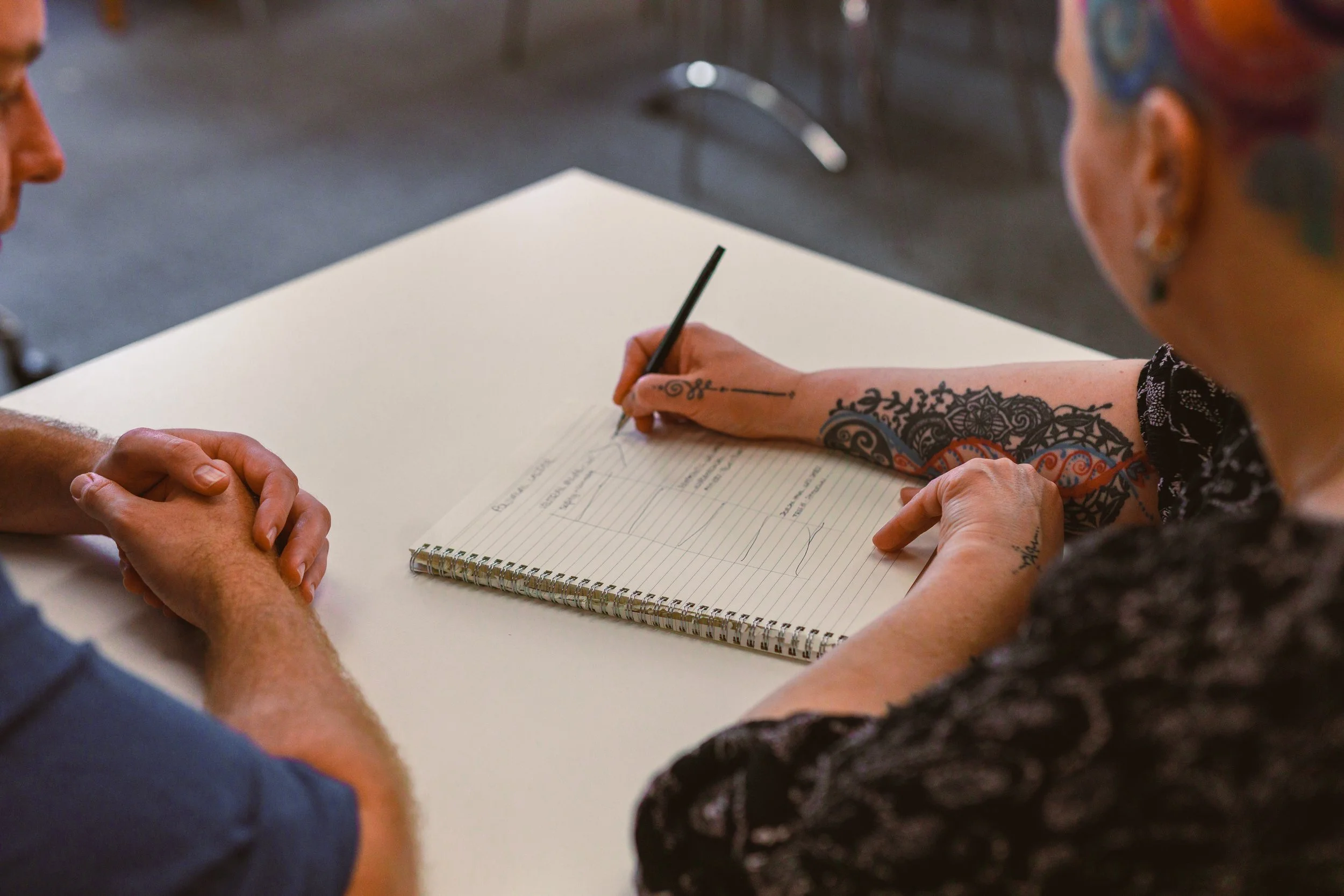
In practice, that means starting with careful assessment — taking time to understand what is actually happening before naming what needs to change. Karin’s work is known for identifying and naming what others in an organisation may be observing but not yet articulating: the pressure patterns, relational dynamics, and systemic conditions that shape how people function day to day.
This is not a diagnostic exercise for its own sake.
It is to give organisations, leaders, and teams a clearer and more realistic path forward.
The work is intentionally relational, practical, and tailored to context.
Because no two organisations — or the pressures operating within them — are exactly the same.
Who Noreia Works With
Noreia works across corporate, government, community, and high-impact sectors — particularly with organisations and individuals navigating sustained complexity, emotional demand, or significant responsibility over time.
In practice, this often means leadership teams who are functioning but feeling the strain, organisations where something has shifted in culture or communication without a clear single cause, and professionals in high-exposure environments who need structured space to sustain the capacity their work demands.
Leadership teams and executives
HR, People & Culture, and WHS professionals
Government and community organisations
Trauma-exposed and frontline services
High-pressure and high-responsibility professional environments
The work may involve training, psychosocial risk consultancy, leadership support, restorative supervision, or longer-term organisational partnerships.
Why This Work Matters
Workplaces do not become healthier simply because people care enough.
Most people are already trying very hard.
The challenge is often that stress, overload, emotional demand, communication breakdowns, and unsustainable expectations gradually become normalised — until people begin functioning differently without fully recognising what is happening.
Usually, the signs appear earlier than organisations realise.
Communication changes.
Capacity narrows.
Decision-making becomes more reactive.
Teams lose reflective space.
People begin surviving conditions they were never meant to carry indefinitely.
Good organisations do not eliminate pressure entirely.
But they can become better at recognising strain earlier, responding more intentionally, and creating conditions that support clearer thinking, safer communication, and more sustainable ways of working over time.